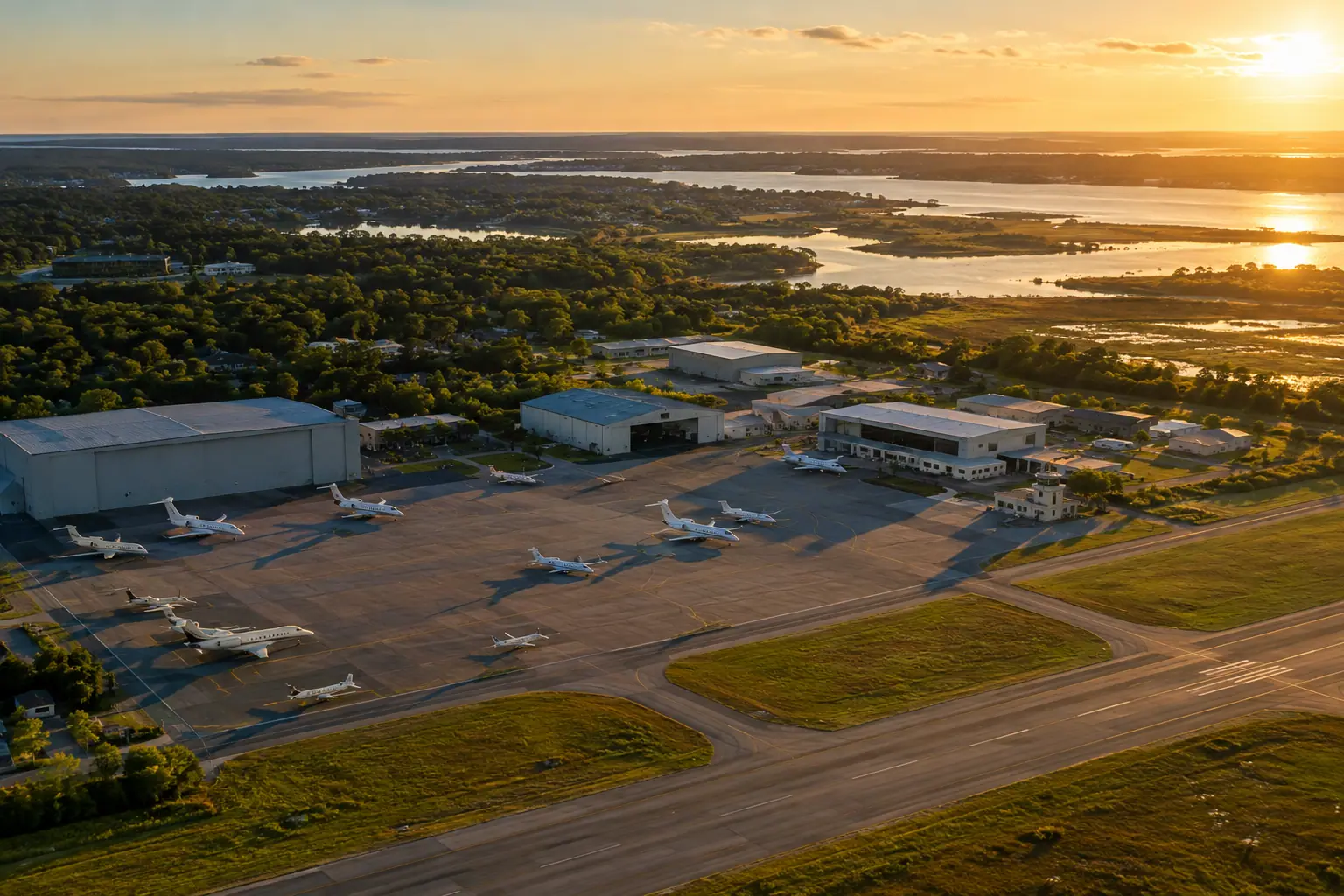
Empty leg deals Tampa
Empty leg deals Tampa are one-way flights on aircraft already repositioning into or out of Tampa International Airport. TPA sits 26 feet above sea level with an 11,002-foot longest runway, so most charter aircraft types can use it. Below is how the pricing works, when supply appears, and how to claim a leg.
Empty leg deals Tampa start with a simple gap in a charter schedule. An operator flies a jet into TPA to pick up a group, and rather than return the aircraft empty, the flight is sold as a one-way seat or full-cabin charter at a reduced rate. Tampa empty leg deals appear most often on repositioning flights into and out of TPA in 2026, and they usually list close to the departure date. The price is an estimate until the operator confirms it, and empty legs move fast because the aircraft has to be somewhere else regardless.
The airport itself is a big part of why the market works here. Tampa International sits 26 feet above sea level with a longest runway of 11,002 feet, so heavy and long-range jets can operate without performance limits. Most private jet flights into Tampa International Airport clear the 11,002-foot runway in 2026 without weight restrictions that would push a leg onto a smaller field. That matters when a Gulfstream or a Challenger is repositioning and the operator wants a short field time.
Charter flights are arranged by brokers and flown by operators. This site is a broker: we match you to an operator holding FAA Part 135 authority, and the operator keeps operational control of the flight. Under DOT Part 295 rules, a broker acts as your agent, not as the airline. If a leg crosses a border, CBP clearance applies, and passenger screening runs under TSA rules where required. Charter brokers place you with FAA Part 135 operators who hold operational control in 2026, and that structure is what keeps a one-way deal legitimate rather than a discount gimmick.
Runways at Tampa International
Tampa International has a longest runway of 11,002 feet at an elevation of 26 feet, which is enough pavement for long-range jets at full fuel on most days. A jet departing TPA at 26 feet elevation needs far less runway than the same jet at a mountain field in 2026, so empty legs here rarely get restricted by takeoff distance. Summer heat raises density altitude, but the effect at sea level is mild compared with high-desert airports, and the operator runs the final numbers before a leg is released.
| Runway | Long | Broad | Surface |
|---|---|---|---|
| 19R/01L | 11,002 ft | 150 ft | Concrete |
| 19L/01R | 8,300 ft | 150 ft | PEM |
| 10/28 | 6,999 ft | 150 ft | PEM |
FBOs and ground handling
Sheltair and Signature Aviation are the two FBOs listed at TPA, and your operator picks which one it uses based on hangar space and fuel. Ground handling for a Tampa charter flight is arranged through Sheltair or Signature Aviation in 2026, and the FBO fee is usually quoted alongside the leg price, not folded into it. Ask for it in writing.
Ground time is short on an empty leg, so the FBO matters less than the schedule. If you are boarding a repositioning flight, plan to arrive when the operator says the aircraft is ready, because the crew is turning the jet to stay on the next mission. Signature Aviation and Sheltair both sit on the field at TPA in 2026, so transfers from downtown or the beaches run about the same whichever one the operator names.
Who empty legs suit
- Travelers with flexible dates who can move within a day or two of a listed leg
- One-way trips where paying for an empty return leg makes no sense
- Small groups who can fill a cabin and split the estimate
- Visitors heading to the Gulf beaches, downtown Tampa, or a connecting stop elsewhere in Florida
| Class | Typical runway need | Here |
|---|---|---|
| Turboprop | 3,300 ft+ | Okay |
| Light jet | 4,000 ft+ | Okay |
| Midsize jet | 5,000 ft+ | Okay |
| Super-midsize jet | 5,200 ft+ | Okay |
| Heavy jet | 5,600 ft+ | Okay |
Weather and density altitude by season
Density altitude at TPA peaks around 2,500 feet at 115F and sits near 2,000 feet in July, so summer performance is manageable at sea level. Charter flights out of Tampa in July fly at roughly 2,000 feet density altitude in 2026, which is a modest penalty for most jets. The bigger summer factor is thunderstorms, not heat, and afternoon storms are routine from June through September.
Winter is the opposite problem in a good way. January highs average 69F with seven wet days, and density altitude drops to about 700 feet, so aircraft perform at their best and the season is the busiest for visitors. Empty leg deals on Tampa charter jets tighten in winter 2026 as snowbird traffic fills the schedule, which means a cheap one-way is more likely to appear on the shoulder months of spring and fall. Watch the wet-day counts: June averages 22 wet days, July 26, and that storms push departures around.
| Month | High, avg | Wet days | DA value |
|---|---|---|---|
| Jan | 69°F | 7 | 700 ft |
| Feb | 74°F | 7 | 1,000 ft |
| Mar | 78°F | 6 | 1,300 ft |
| Apr | 83°F | 9 | 1,600 ft |
| May | 87°F | 11 | 1,900 ft |
| Jun | 87°F | 22 | 1,900 ft |
| Jul | 88°F | 26 | 2,000 ft |
| Aug | 88°F | 25 | 2,000 ft |
| Sep | 86°F | 20 | 1,800 ft |
| Oct | 83°F | 9 | 1,600 ft |
| Nov | 78°F | 6 | 1,300 ft |
| Dec | 73°F | 6 | 1,000 ft |
Getting to and from the airport
TPA sits close to downtown Tampa and the Gulf beaches, with the main terminal connected to airside concourses, and the FBOs reached by separate roads. Private jet passengers at Tampa International in 2026 arrive at Sheltair or Signature Aviation, not the main terminal, so confirm the FBO with your operator before you leave. Allow extra time in winter, when traffic to the beaches and the airport both pick up.
Private jet routes via Tampa
These 6 private jet routes span 199 to 2,129 nautical miles; one-way light jet estimates run $4,000 to $36,000.


Questions about this airport
What are empty leg deals Tampa and how do they get priced?
Empty leg deals Tampa are one-way flights on jets repositioning into or out of TPA, priced below a standard charter because the aircraft is flying anyway. The estimate depends on aircraft type, distance, and how close the departure is. Treat every price as an estimate until the operator confirms it, and expect the leg to disappear if it is not claimed.
How much runway does a charter jet need at Tampa International?
TPA has a longest runway of 11,002 feet at 26 feet elevation, so nearly every charter type can operate without a takeoff penalty. That sea-level elevation is why empty legs here are rarely restricted for performance. The operator still computes weight and balance for the specific aircraft and the day's temperature before the flight is confirmed.
When do empty legs show up most often in Tampa?
Supply peaks when repositioning demand is uneven, which tends to be spring and fall rather than the winter snowbird rush. In 2026, expect more listings around events and holiday edges. June through September brings 20 or more wet days a month, and storms reshuffle schedules, which sometimes creates a leg on short notice.
Does summer heat affect flights out of TPA?
July density altitude at TPA runs about 2,000 feet, and the peak at 115F is around 2,500 feet, both modest for a sea-level airport. Heat is not usually the limiting factor. Afternoon thunderstorms from June through September are the real scheduling risk, so build slack into any connection or ground transfer on a summer leg.
Who operates the aircraft on a Tampa charter flight?
Operators holding FAA Part 135 authority fly the aircraft and keep operational control, including the final call on go or no-go. We arrange the flight as your agent under DOT Part 295 rules and do not own or operate aircraft. If a leg crosses into another country, CBP handles clearance, and TSA screening rules apply where they are required.
What should I confirm before paying for a Tampa empty leg?
Confirm the operator's name and certificate, the exact FBO at TPA, the total price including ground handling, and the cancellation terms, since an empty leg can be withdrawn if the aircraft is reassigned. Ask whether the estimate covers crew and fuel. Prices are estimates, and the written quote is the number that counts.