
Empty Leg Flights by Aircraft
Empty leg flights are one-way repositioning trips that operators discount. A light jet empty leg from New York to Miami can run $10,000 to $15,000. Here is how each aircraft class changes the price and comfort.
- Home
- Aircraft
Empty leg flights by aircraft start with the class you need, not the discount you hope to find. A turboprop repositioning between Dallas and Houston carries 6 to 8 passengers at 300 knots, while a heavy jet on the same kind of leg carries 10 to 14 at 470 knots. The aircraft determines the cabin, the baggage room, and the hourly rate that the empty leg price is built from.
Most empty legs appear on routes where operators reposition between popular airports such as Teterboro, Van Nuys, and Opa Locka. A midsize jet cruising at 440 knots covers 2,100 nautical miles, which handles New York to Los Angeles nonstop. A super-midsize at 470 knots reaches 3,200 nautical miles, so it can take Chicago to Miami with room to spare. When you compare empty leg flights by aircraft, you are really comparing range, speed, and cabin height against the schedule you can accept.
Turboprop
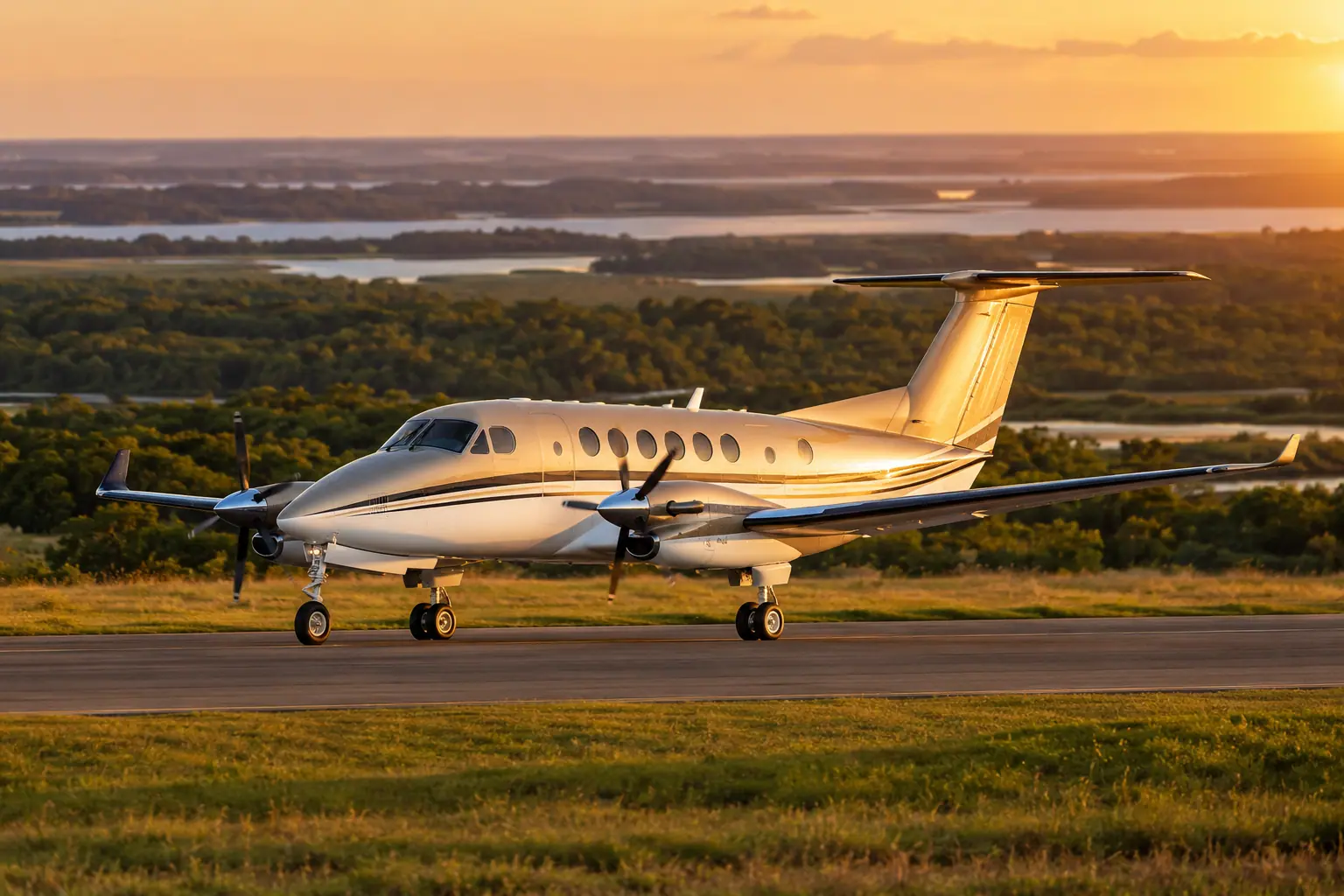
Turboprops are the lowest-cost entry for empty leg flights by aircraft on short routes. Hourly rates run $2,200 to $3,500, and typical range is 1,500 nautical miles at about 300 knots. Cabins seat 6 to 8 passengers. For a repositioning leg between Dallas and Houston, a turboprop keeps the price near the bottom of the market while still using a private terminal.
Beechcraft King Air 350i
- 8 seats
- 312 kt cruise
- 1,800 nm range
The King Air 350i is a turboprop with 8 seats and a 1,800-nautical-mile range. Cruise speed is 312 knots, and the cabin is 4 feet 9 inches tall and 16 feet 8 inches long. Baggage space is 55 cubic feet. On an empty leg between Dallas and Houston, it keeps the price low while still offering a pressurized cabin and private terminal access.
Pilatus PC-12 NGX
- 6 seats
- 290 kt cruise
- 1,800 nm range
The Pilatus PC-12 NGX carries 6 passengers at 290 knots over 1,800 nautical miles. The cabin is 4 feet 10 inches tall and 16 feet 11 inches long, with 40 cubic feet of baggage. It is a single-engine turboprop, so some operators price it below twin-engine turboprops. For short empty legs, it is one of the most economical options in the fleet.
Light jet
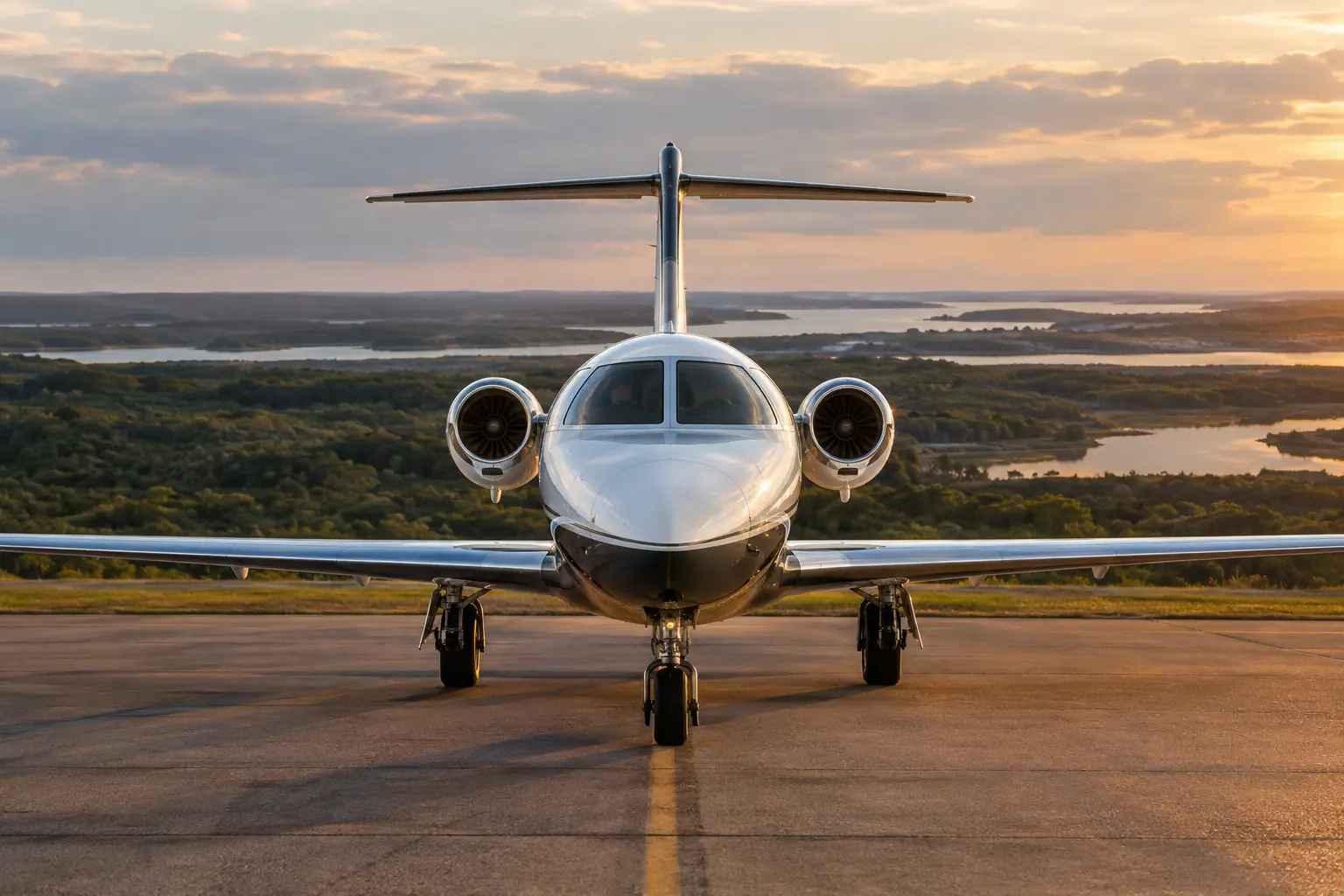
Light jets cover the most common empty leg routes at $3,800 to $5,800 per hour. Range is about 1,400 nautical miles at 430 knots, with 4 to 7 passengers. A New York to Miami leg at 949 nautical miles fits comfortably, and the light jet time is 2 hours 37 minutes. Baggage space is smaller, so pack for a short trip.
Embraer Phenom 300E
- 7 seats
- 464 kt cruise
- 2,010 nm range
Pilatus PC-24
- 8 seats
- 440 kt cruise
- 2,000 nm range
Midsize jet
Midsize jets add cabin height and baggage room for $5,200 to $7,800 per hour. Range is roughly 2,100 nautical miles at 440 knots, seating 7 to 9 passengers. A New York to Los Angeles leg at 2,129 nautical miles is near the limit, so check payload. The stand-up cabin makes a 6-hour flight far more comfortable than a light jet.
Hawker 800XP
- 8 seats
- 447 kt cruise
- 2,540 nm range
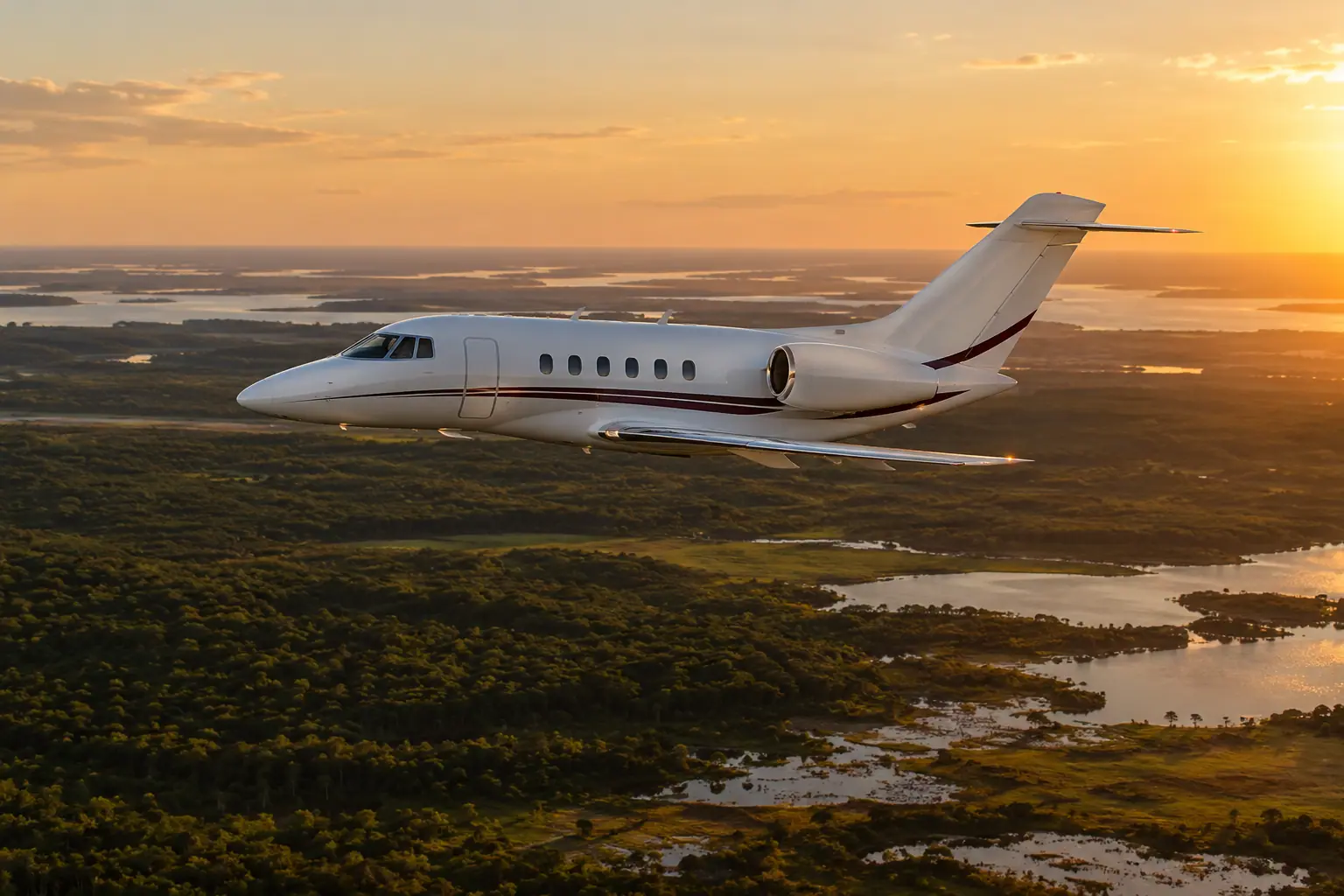
The Hawker 800XP is a midsize jet with 8 seats and a 2,540-nautical-mile range. Cruise speed is 447 knots, and the cabin is 5 feet 9 inches tall and 21 feet 4 inches long. Baggage space is 50 cubic feet. A New York to Los Angeles empty leg at 2,129 nautical miles is within range, and the stand-up cabin makes the 6-hour trip easier.
Cessna Citation XLS+
- 8 seats
- 441 kt cruise
- 2,100 nm range
The Citation XLS+ carries 8 passengers at 441 knots over 2,100 nautical miles. The cabin is 5 feet 8 inches tall and 18 feet 6 inches long, with 90 cubic feet of baggage. It is a midsize jet that fits New York to Miami comfortably. The baggage capacity is larger than the Hawker 800XP, which matters on longer trips.
Super-midsize jet
Super-midsize jets handle longer empty legs at $7,200 to $10,000 per hour. Range reaches 3,200 nautical miles at 470 knots, with 8 to 10 passengers. A Chicago to Miami leg at 1,023 nautical miles leaves plenty of fuel margin. This class often appears on coast-to-coast repositioning, where the extra speed and cabin length matter.

Gulfstream G280
- 9 seats
- 482 kt cruise
- 3,600 nm range
The Gulfstream G280 is a super-midsize jet with 9 seats and a 3,600-nautical-mile range. Cruise speed is 482 knots, and the cabin is 6 feet 3 inches tall and 25 feet 10 inches long. Baggage space is 154 cubic feet. It can fly Chicago to Miami at 1,023 nautical miles with fuel to spare, and the cabin height suits longer legs.
Cessna Citation X+
- 9 seats
- 527 kt cruise
- 3,460 nm range
The Citation X+ seats 9 at 527 knots over 3,460 nautical miles. The cabin is 5 feet 8 inches tall and 25 feet 2 inches long, with 82 cubic feet of baggage. It is the fastest aircraft in this list, which shortens a New York to Los Angeles leg. The super-midsize cabin is longer than a midsize but not as tall as the G280.
Heavy jet
Heavy jets serve the longest empty legs at $9,500 to $14,500 per hour. Range is about 4,000 nautical miles at 470 knots, seating 10 to 14 passengers. A New York to Los Angeles leg at 2,129 nautical miles is routine, and the cabin height of over 6 feet makes 6 hours feel shorter. These aircraft usually reposition between hubs like Teterboro and Van Nuys.
Bombardier Challenger 650
- 12 seats
- 470 kt cruise
- 4,000 nm range
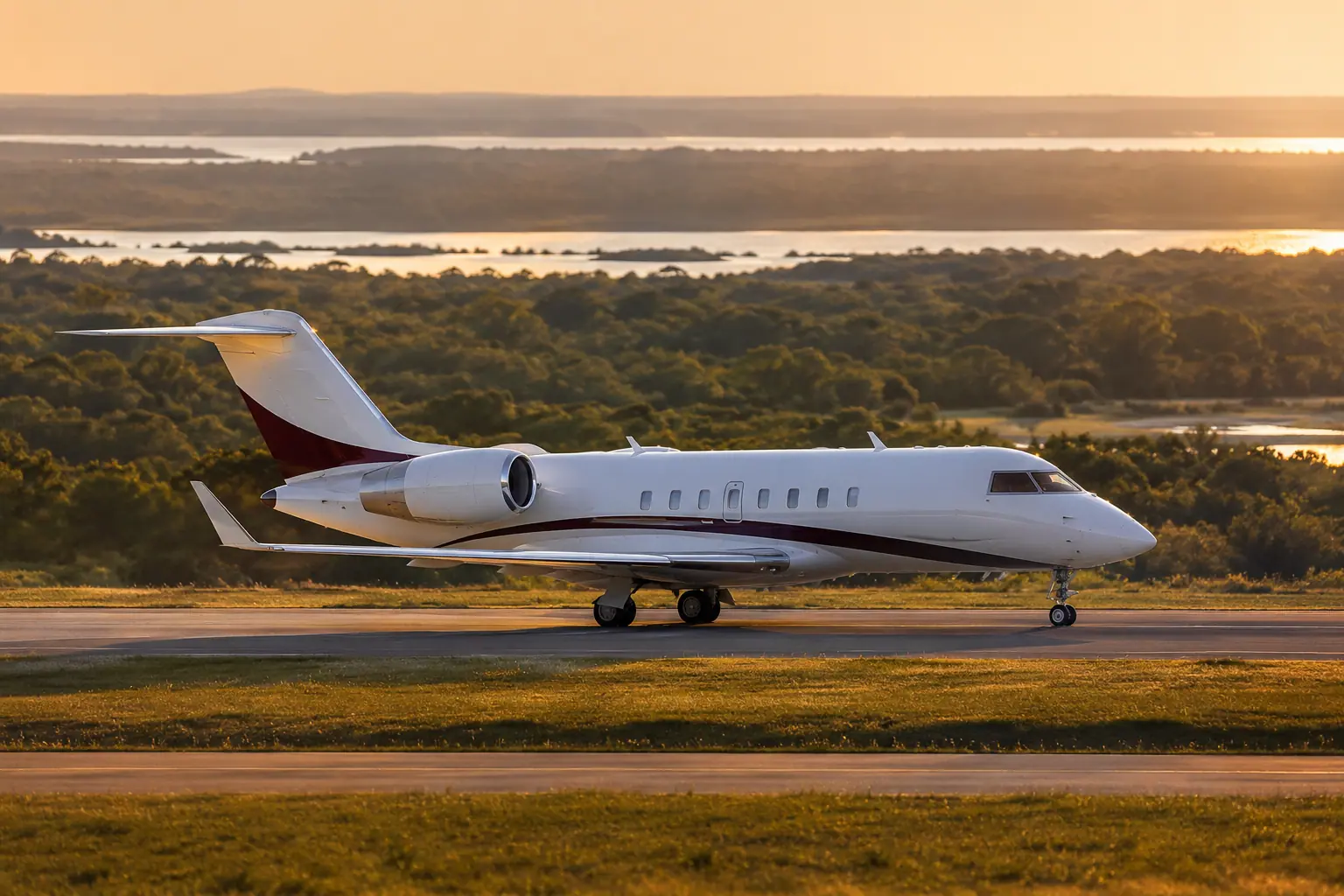
The Challenger 650 is a heavy jet with 12 seats and a 4,000-nautical-mile range. Cruise speed is 470 knots, and the cabin is 6 feet 2 inches tall and 28 feet 4 inches long. Baggage space is 115 cubic feet. It handles New York to Los Angeles at 2,129 nautical miles nonstop, and the wide cabin suits groups of 10 or more.
Dassault Falcon 900LX
- 12 seats
- 459 kt cruise
- 4,750 nm range
The Falcon 900LX carries 12 passengers at 459 knots over 4,750 nautical miles. The cabin is 6 feet 2 inches tall and 33 feet 2 inches long, with 127 cubic feet of baggage. It is the longest-range aircraft in the fleet, so it can take a Miami to Nassau empty leg at 161 nautical miles or a transcontinental repositioning with equal ease.
Choosing an aircraft for empty leg
Start with the route length and the number of passengers, then match the aircraft class to both. A New York to Miami leg at 949 nautical miles fits a light jet, but four passengers with golf bags will prefer a midsize for the 90 cubic feet of baggage. If the leg is Los Angeles to Las Vegas at 199 nautical miles, then a turboprop or light jet keeps the price low without sacrificing much time. If you need to carry 10 people, then a heavy jet is the only class in this fleet that fits.
Check the operator's certificate and the departure airport's fees before you commit. Empty legs are flown by FAA Part 135 operators who hold operational control; we act as the broker under DOT Part 295 and arrange the flight. For international legs like Miami to Nassau, CBP clearance is required, and the operator handles the manifest. If the empty leg departs from a busy airport like Teterboro, then peak density altitude at 115°F can reach 2,300 feet, which affects performance planning on hot days.
Questions
What are empty leg flights by aircraft and how are they priced?
Empty leg flights by aircraft are one-way repositioning trips sold at a discount from the normal charter rate. The price is built from the aircraft's hourly rate: a light jet at $3,800 to $5,800 per hour, a midsize at $5,200 to $7,800, and a heavy at $9,500 to $14,500. A New York to Miami empty leg in a light jet can run $10,000 to $15,000. These are estimates, and the operator confirms the final quote.
Which aircraft class is best for a short empty leg like Los Angeles to Las Vegas?
A turboprop or light jet is the most economical choice for a 199-nautical-mile leg. A light jet covers it in 47 minutes for an estimated $4,000 to $6,000, while a turboprop at $2,200 to $3,500 per hour keeps the cost lower still. The HondaJet Elite II, with 5 seats and a 1,550-nautical-mile range, is a typical light jet on this route. If you have more than 7 passengers, then a midsize or larger is needed.
Can a light jet fly New York to Miami on an empty leg?
Yes. The distance is 949 nautical miles, and a light jet with a 1,400-nautical-mile range can make it in 2 hours 37 minutes. The Citation CJ4 Gen2, with 7 seats and a 2,165-nautical-mile range, has margin to spare. Typical light jet pricing for this leg is $10,000 to $15,000 one way. If you carry more than 7 passengers, then a midsize or super-midsize is the better fit.
What range does a super-midsize jet need for Chicago to Miami?
The leg is 1,023 nautical miles, and a super-midsize jet like the Gulfstream G280 has a 3,600-nautical-mile range, so fuel is not a concern. Cruise speed is 482 knots, and the cabin is 6 feet 3 inches tall. Hourly rates run $7,200 to $10,000. If the empty leg is priced by the hour, then the total depends on the operator's minimum billing, which is often two hours.
How do I verify an empty leg flight is on a certificated operator?
Ask for the operator's FAA Part 135 certificate number and confirm it on the FAA website. We are a charter broker under DOT Part 295 and do not own aircraft; the operator holds operational control. For international legs such as Miami to Nassau at 161 nautical miles, the operator also files the CBP manifest. If the answer is vague, then walk away.
What does a heavy jet empty leg cost on a long route?
Heavy jets run $9,500 to $14,500 per hour. A New York to Los Angeles leg at 2,129 nautical miles takes about 6 hours in a light jet, but a heavy jet at 470 knots shortens that. The Challenger 650, with 12 seats and a 4,000-nautical-mile range, is typical. Expect a five-figure quote, and treat it as an estimate until the operator confirms availability.