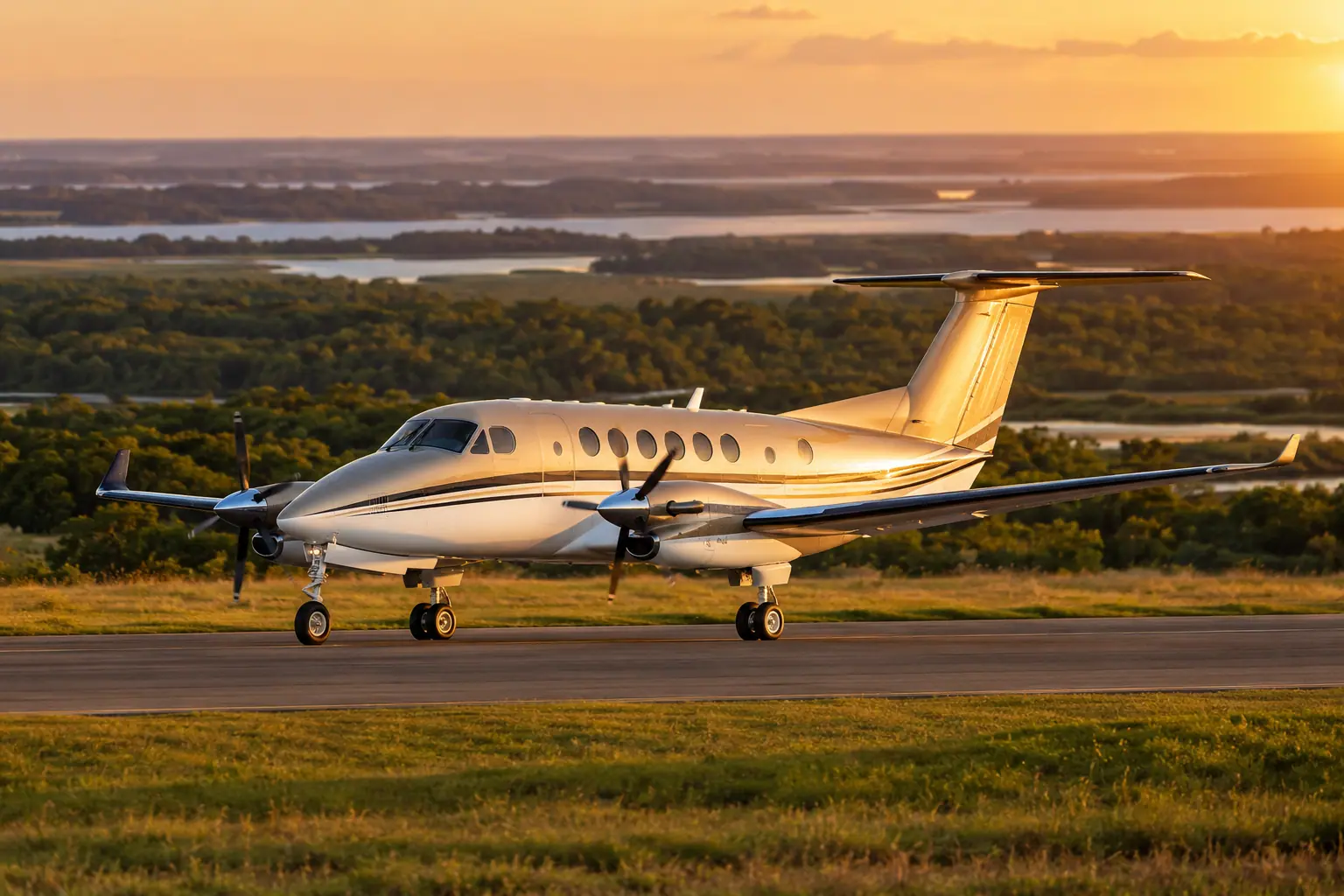
Empty leg Dallas to Houston
Empty leg Dallas to Houston flights move repositioning aircraft across 239 miles. A turboprop flies the trip in about 1h 02m, with one-way estimates from $2,500 to $3,500. Every figure here is an estimate until an operator confirms.
Dallas to Houston private jet prices by aircraft
From Dallas to Houston, a private jet covers 208 nautical miles in 1h 02m on a turboprop. One-way estimate: $2,500–$3,500.Below are typical one-way estimates by aircraft class for the Dallas to Houston route. The turboprop sits at the low end, light and midsize jets in the middle, heavy jets at the top. Times are nonstop. Empty legs can price under these figures when an operator needs the aircraft moved, but treat all of it as estimates that shift with demand.
| Aircraft class | Flight time | Estimate one-way | Notes |
|---|---|---|---|
| Turboprop | 1h 02m | $2,500–$3,500 | Best fit |
| Light jet | 0h 48m | $4,000–$6,000 | Direct, no stops |
| Midsize jet | 0h 48m | $5,000–$8,000 | Direct, no stops |
| Super-midsize jet | 0h 46m | $7,000–$10,000 | Direct, no stops |
| Heavy jet | 0h 46m | $9,500–$14,500 | Direct, no stops |
Ballpark per aircraft, not per seat, before federal excise tax and segment fees. Duration covers taxi, climb and descent.
Why this trip suits a turboprop
The turboprop is the practical pick for 208 nautical miles. A Beechcraft King Air 350i seats 8 and cruises at 312 knots, so the trip runs about 1h 02m. A turboprop on this short hop often beats a light jet on price by a wide margin, landing between $2,500 and $3,500. Light and midsize jets cut the time to about 0h 48m but start at $4,000 and $5,000.
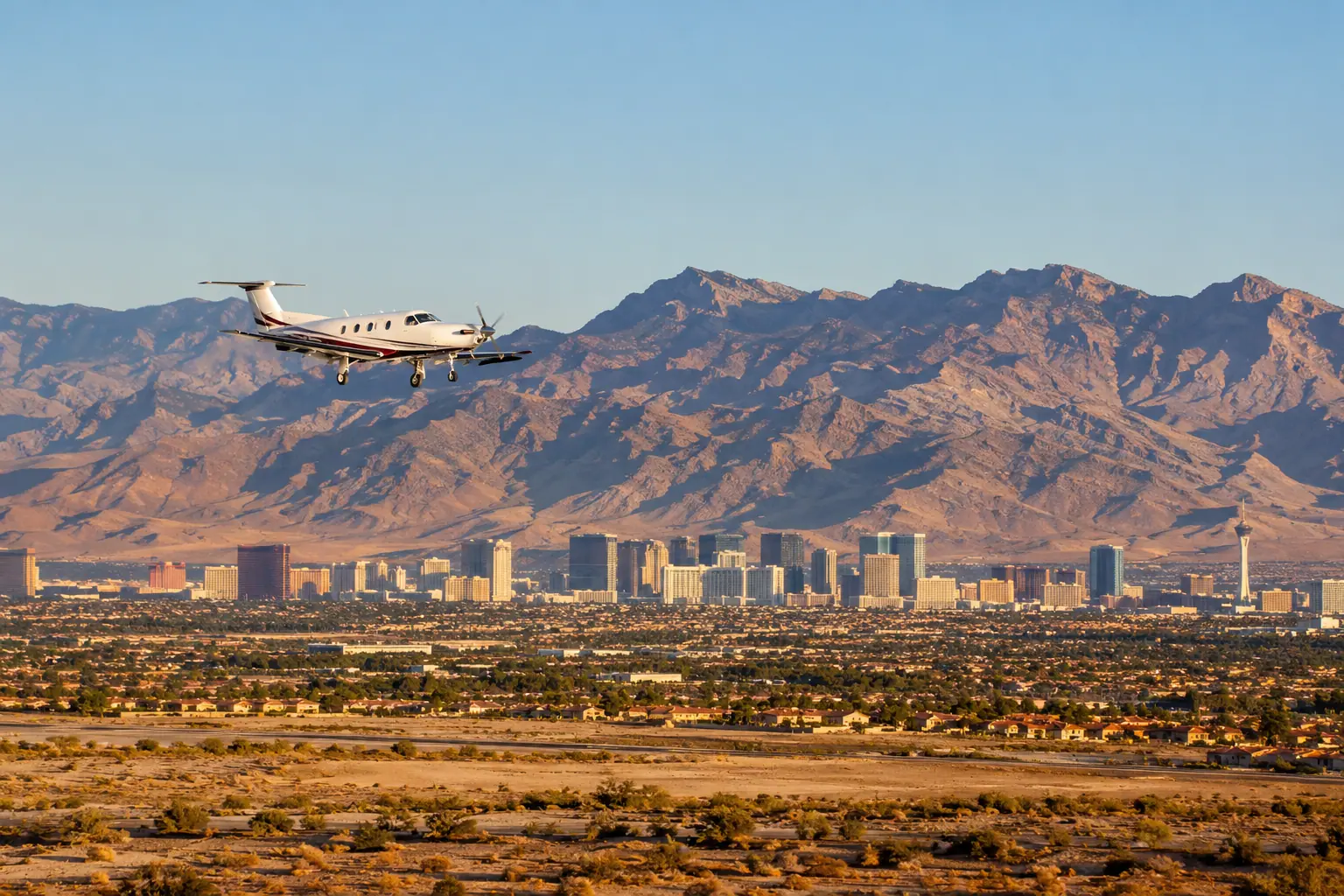
If your schedule is tight or you want more cabin room, then a light jet is a reasonable upgrade for the 48-minute flight, at $4,000 to $6,000. A Pilatus PC-12 NGX carries 6 with 40 cubic feet of baggage and is the other turboprop worth pricing. When you compare jets and turboprops for Houston, then request both so the estimates sit side by side. Heavy jets at $9,500 to $14,500 rarely earn their price on a hop this short.
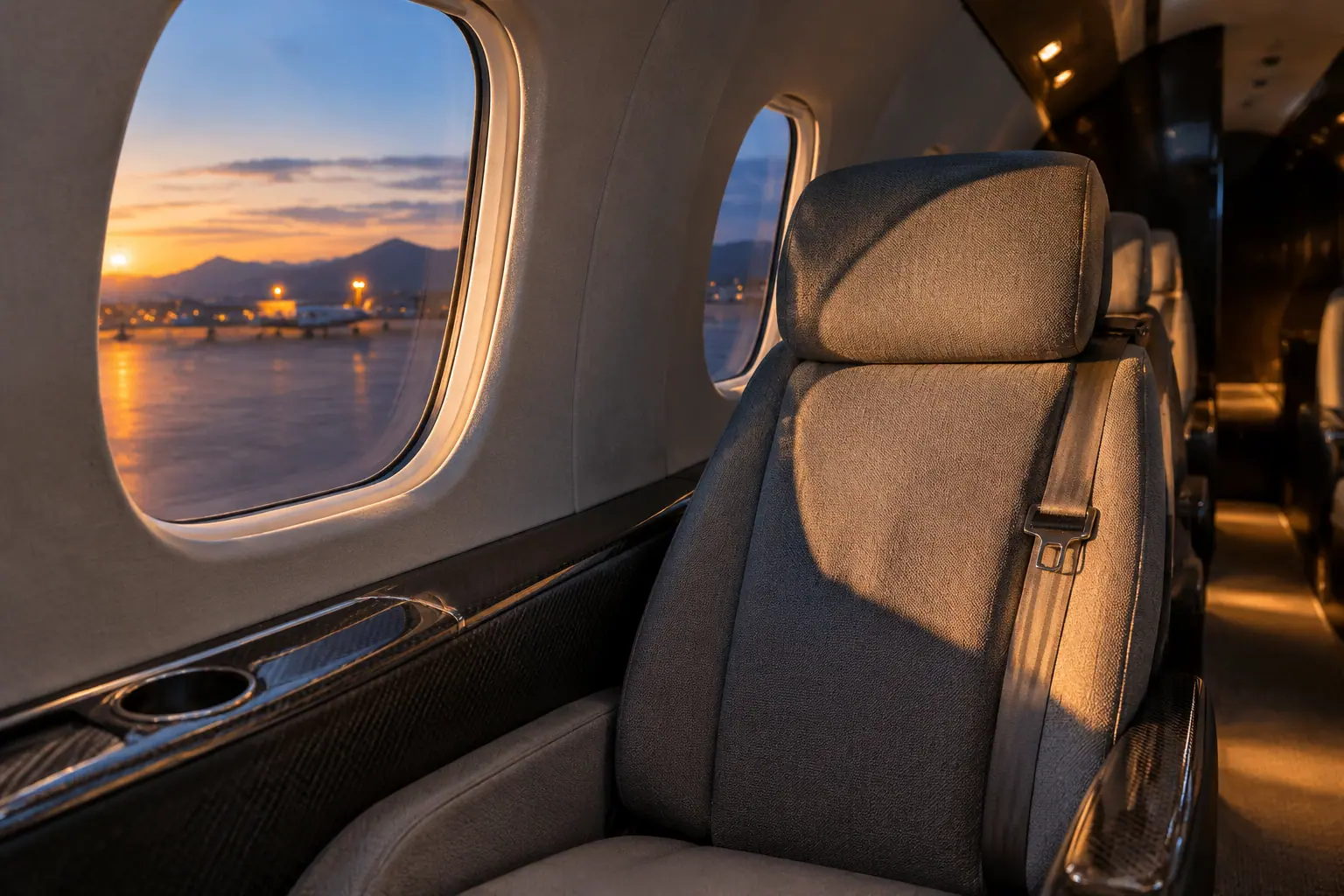
Beechcraft King Air 350i
- 8 seats
- 312 kt cruise
- 1,800 nm range
Cabin 4 ft 9 in tall, 16 ft 8 in long. Baggage 55 cu ft.
Pilatus PC-12 NGX
- 6 seats
- 290 kt cruise
- 1,800 nm range
Cabin 4 ft 10 in tall, 16 ft 11 in long. Baggage 40 cu ft.

Leaving Dallas
Most Dallas to Houston empty legs depart Dallas Love Field (DAL) or Addison Airport (ADS), and Love Field's 8,800-foot runway sits close to downtown. Addison Airport's 7,203-foot runway handles the turboprops and light jets that dominate this route. Where you leave from depends on where the aircraft is based, so ask when you request a quote.
If the empty leg starts at Addison, then plan a shorter drive from north Dallas than Love Field requires. Both airports keep you out of the airline terminal line. If you are flying a turboprop out of Addison, then baggage space is 55 cubic feet on the King Air 350i, so pack accordingly.
Arriving in Houston
Arrivals land at William P. Hobby Airport (HOU) or Sugar Land Regional (SGR), and Hobby's 7,602-foot runway is the closer of the two to downtown. Sugar Land Regional's 8,000-foot runway serves the southwest side and avoids Hobby's traffic. Hobby puts you near the Texas Medical Center and the downtown sports venues.
If your destination is west of downtown, then Sugar Land Regional usually saves drive time, especially toward the Energy Corridor or Fort Bend County. When a Houston empty leg lands at Sugar Land, then check the drive before you commit, because the two airports sit on opposite sides of the city.
| Airport | Code | Runway |
|---|---|---|
| William P. Hobby Airport | KHOU / HOU | 7,602 ft |
| Sugar Land Regional Airport | KSGR / SGR | 8,000 ft |
| Dallas Love Field | KDAL / DAL | 8,800 ft |
| Addison Airport | KADS / ADS | 7,203 ft |
When empty legs appear and when to book
Empty legs appear when an operator needs to move an aircraft without passengers, and on this route that often follows a one-way charter into Dallas. The best availability tends to fall in the morning and early afternoon on weekdays, when repositioning flights are common. Midweek legs are easier to find than Friday or Sunday departures.
Charter demand between the two cities climbs around major Houston events and through the fall and spring business season. If you can be flexible by a day or two, then you widen your options and may find a lower estimate. Book as soon as a leg fits, because empty legs are single seats in time and are often taken within hours. Prices are estimates and can change until the operator confirms.
Private jet routes similar to Dallas to Houston
These 6 private jet routes span 82 to 279 nautical miles; one-way turboprop estimates run $2,000 to $4,500.

Questions about this route
How much does an empty leg Dallas to Houston cost?
Typical one-way estimates run $2,500 to $3,500 for a turboprop, $4,000 to $6,000 for a light jet, and $5,000 to $8,000 for a midsize jet on this 208-nautical-mile route. Empty legs can price below those figures because the operator is repositioning. Treat every number as an estimate until the flight is confirmed.
How long is the flight from Dallas to Houston?
About 1h 02m in a turboprop and 0h 46m to 0h 48m in a jet, nonstop across 239 miles. Door-to-door time usually beats driving, which takes hours on I-45, and competes with airline travel once you count security and connections. Ask the operator for block time on the specific aircraft.
Which airports serve empty leg Dallas to Houston flights?
Departures typically use Dallas Love Field (DAL) with its 8,800-foot runway or Addison Airport (ADS) with 7,203 feet. Arrivals land at William P. Hobby (HOU) at 7,602 feet or Sugar Land Regional (SGR) at 8,000 feet. The exact pair depends on where the operator bases the aircraft that day.
Can I book a same-day round trip?
Yes, if the schedule allows. The flight is under an hour each way, so a turn in Houston and a return the same day is practical for turboprops and light jets. Ask about crew duty limits and wait time. A round trip on one aircraft may cost less than two separate one-way charters. All figures remain estimates until confirmed.
Who operates these flights?
Flights are flown by FAA Part 135 operators who hold operational control. This site is a charter broker and acts as an agent under DOT Part 295 rules. That means the operator, not the broker, is responsible for the flight and crew. If a leg crosses a border, CBP handles clearance; no international leg exists on this Texas route.
What changes the price on this route?
Aircraft class is the biggest factor: a turboprop at $2,500 to $3,500 sits well below a heavy jet at $9,500 to $14,500. Time of day and how soon the operator needs the aircraft moved also matter. Empty legs are priced to fill a gap, so a leg that must move today may cost less than one planned a week out. All figures are estimates.